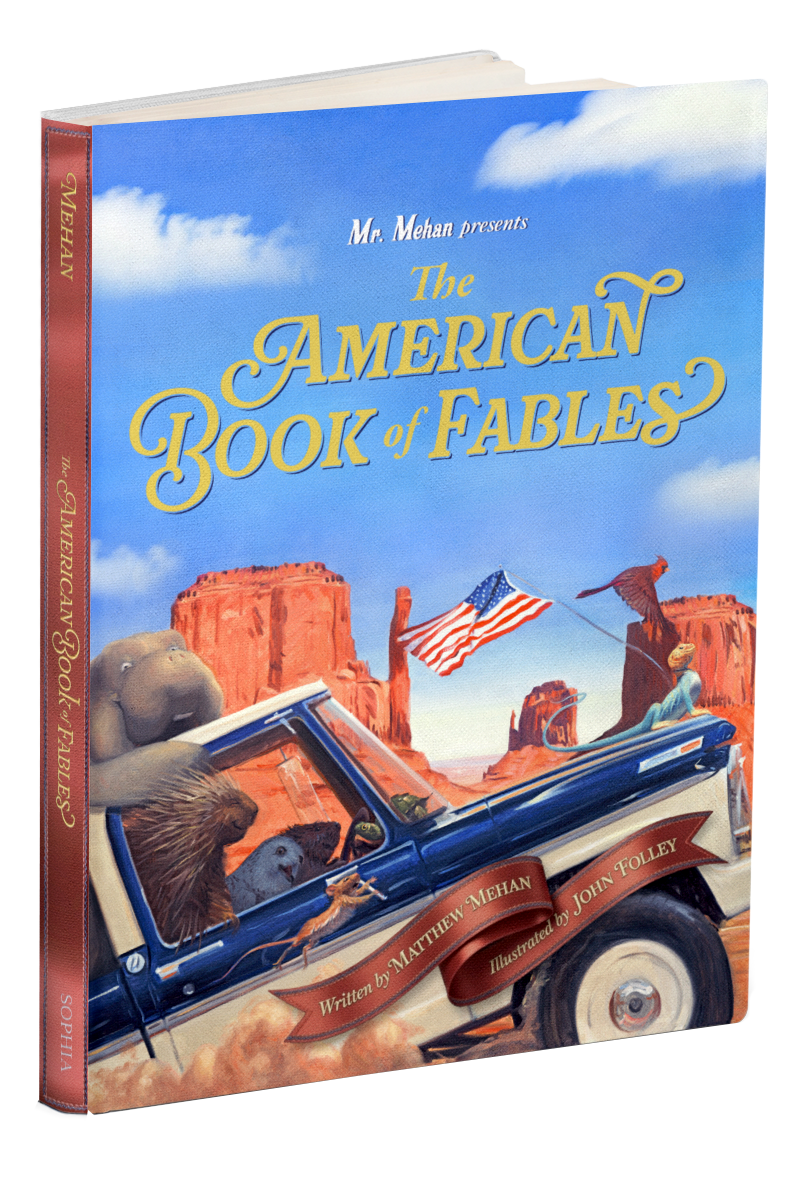
This summer, we celebrate the 250th birth of America! There are all sorts of events planned throughout the country, and a new book by Matthew Mehan, Classical educator and writer, is also coming out just in time to celebrate the festive occasion. The American Book of Fables is a gorgeous, colorful book filled with patriotic stories, fables, nursery rhymes, quotes from wise and famous men and women, and more.
The American Book of Fables
by Matthew Mehan
Illustrated by John Folley
Published by Sophia Institute Press
Why should we read our children fables?
Fables are a great way to teach children lessons and help them grow in virtue. In our home, we are currently taking a course in the Classical Liberal Arts Academy about Aesop’s fables. We always discuss what Aesop is trying to teach us with each fable, and which characters are being good examples (or, bad examples) of virtue.
Reading fables to children is a wonderful way to train them to detect morals, lessons, and values later when they read great works such as the Summa Theologica by St. Thomas Aquinas or Confessions by St. Augustine. Fables also help children to grow in wisdom, which is a main goal of this book – to impart the wisdom of wise men and women to children.
What will you find in this book?
This book is packed with 364 huge and beautiful pages filled with fables, stories, and other words of wisdom. Some are original, while others are classics compiled from various sources. The author has organized the book into 13 parts which explore different parts of the United States as well as different parts of the Declaration of Independence.
The illustrations are so lovely, whimsical, and charming. They remind me of the pictures in our Beatrix Potter collection and classic nursery rhyme books. The two page spreads at the beginning of each section are amazing! Here is an example:
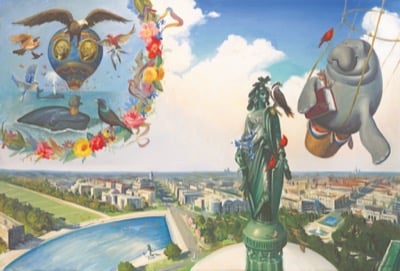
I love how the book is organized into the different locations across the USA such as “Mangroves and Everglades,”The Great Basin,” “Many Glaciers,” and more. The stories in each section fit each particular theme.
For example, in the Mangroves and Everglades section, there are poems about egrets, frogs, manatees, and a short story from the Florida Keys about some animals’ encounters with humans.
Many stories are also adapted and/or inspired by Aesop’s fables. For example, the animals are changed to fit the different themed sections and to include animals native to the different parts of the US. It was fun to read these new spins on the classic fables and think about the lessons and morals they are teaching. At the end of each fable, there is a short explanation of the moral to help you.
Stories for Littles, Middles, and Bigs
The book is packed with stories not only organized by US region, but also organized by level: for “Littles,” “Middles,” and “Bigs.” The stories and poems for littles are short, cute, and usually rhyme. There are familiar nursery rhymes (like Jack Sprat) and other fun, new nursery rhymes about the alphabet and nature. These are probably best for toddlers and lower elementary.
Next are the stories and poems for the “Middles.” This section includes most of the fables adapted from Aesop with other stories as well. I think that the Littles would enjoy some of these as well since they are fun, about animals, and not too long.
The last section is for the “Bigs.” These are some very sophisticated and lengthy poems, stories, letters from the founding fathers, and passages from the Bible. The letters from George Washington and John Adams were very interesting! Some of these could also be shared with the Littles and Middles.
Each section has a part for Littles, Middles, and Bigs and these groupings are followed by “Witty-Wise Sayings” – quotes from wise men and women. The people quoted in section include Classical philosophers, saints, the Bible, and some of the founding fathers.
Extra and Free Online Resources for this Book
In the back of the book, there are some “eye spy” lists which I thought were super fun. They are lists of objects to spot throughout the book – again divided into levels for Littles, Middles, and Bigs. This is such a fun extension for the book!
There is also a QR code in the back to take you to two helpful and free resources: a Glossary and American Almanac. The Glossary is a must so that you can find poems and stories about certain topics. The Almanac is a guide for the indigenous creatures throughout the book. There are also companion coloring pages.
Ways to Use this Book
This book truly has something for all ages, so it will appeal to the entire family. You could read through it every night before bed time. If you homeschool, this would be a great resource to read from when you study American History – especially if your homeschooling style is Classical. You could also enjoy it around the 4th of July or Memorial day to celebrate the gift of our great country.
You can find The American Book of Fables at Sophia Institute Press.
If you make a purchase via a link on this site, we may receive a small commission. There will be no added cost to you. Thank you!
